





































How to Choose a Packaging Supplier for Q4

- 200+ templates & patterns
- Real time 3D packaging preview
- Upload logo and choose brand colours

Subscribe now! Receive 15% discount.
Don’t miss out – get 15% off your first order when you join the newsletter. It’s fast, free, and kinda smart.

You're now subscribed!
In this article:
- Key takeaways
- What minimum order quantity (MOQ) makes sense for your business?
- How should you evaluate lead times and delivery schedules?
- Why does a wide product range matter for your operations?
- Can you design and order your packaging online?
- What proofing and quality control steps are in place?
- Will you get dedicated customer service when things get busy?
- Does the supplier support multi-market shipping?
- Supplier evaluation checklist
In short: Finding the right packaging partner for Q4 means balancing speed, flexibility, and catalogue range. At Packhelp, we produce custom-printed boxes from just 30 pieces using full CMYK digital printing. This guide helps you assess minimum order quantities, lead times, and product variety so you can secure your peak season supply without risking stockouts.
Key takeaways
- Look for flexible minimum order quantities that match your actual product demand and storage limits.
- Consolidate your purchasing by choosing a partner with a broad catalogue to simplify your logistics.
- Prioritise predictable lead times over vague promises to keep your Black Friday operations running smoothly.
- Use online design tools with 3D previews to speed up the proofing and ordering process.
What minimum order quantity (MOQ) makes sense for your business?
The right MOQ depends on your specific product lines and storage capacity, not on some arbitrary industry standard. You need a supplier who scales with you. Tying up your cash flow in thousands of boxes just to get a custom print is a common trap during the holiday rush. If you are testing a limited-edition Christmas bundle or launching a niche product, you want the freedom to order small batches without renting extra warehouse space.
At Packhelp, we offer custom printing from 30 pieces on select products through our online creator. This lets you run targeted seasonal campaigns and test new designs with minimal financial risk. Keep in mind that the exact starting threshold varies depending on the specific box or bag type you select. Follow a dedicated Q4 packaging preparation checklist to align those thresholds with your campaign calendar and stock levels.
Your core, high-volume items are a different story. Once a product line proves successful, you can scale up your orders confidently. We handle this transition by shifting from digital printing to offset or flexographic printing for larger runs, so you get cost-effective production at scale while still keeping the option of small runs for special projects.
How should you evaluate lead times and delivery schedules?
You should look for predictable, clearly defined production and shipping windows rather than vague guarantees. Time is your most valuable asset during the Black Friday and pre-Christmas rush. A supplier who promises rapid delivery but fails to follow through will leave you scrambling to ship orders in plain brown cardboard or, worse, delaying customer shipments entirely.
Ask potential partners for hard numbers for both manufacturing and transit times. Knowing these figures lets your warehouse team schedule packing shifts accurately. For example, at Packhelp, we require 7 days to process orders for unprinted boxes. Once your packaging leaves our European production facilities, delivery within the European Union takes 3 to 5 working days.
Build these specific timelines into your Q4 planning by working backwards from your launch dates. Planning with concrete numbers protects your brand reputation during the most critical sales period of the year. Relying on guesswork or best-case scenarios often leads to supply chain bottlenecks just when your order volume peaks, so prepare an emergency plan using a guide to handling packaging shortages or late suppliers and keep your fulfilment running even under pressure.
Why does a wide product range matter for your operations?
Sourcing all your supplies from a single vendor cuts down your administrative work and helps your branding match across different materials. Managing five different suppliers during peak season is a logistical headache that drains your team's energy. When you consolidate your purchasing, you spend less time tracking invoices and chasing separate delivery trucks.
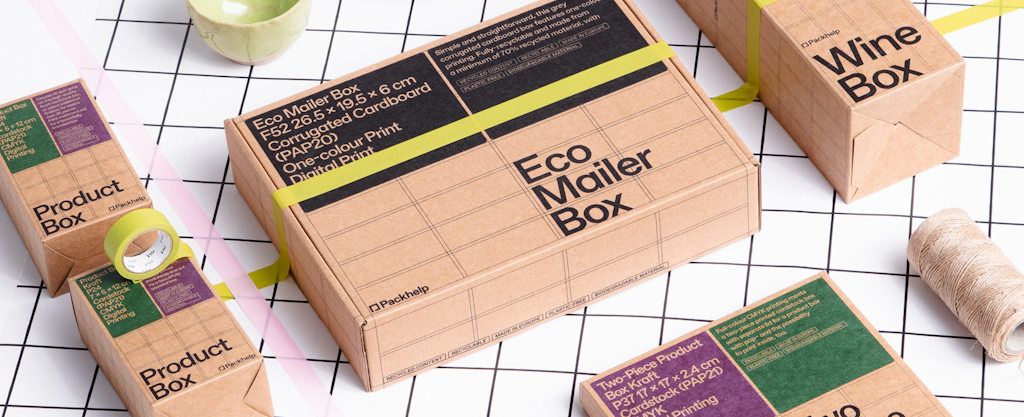
Start with the unboxing experience you want to create and the practical needs of your shipping department. Your core requirement might be custom mailer boxes for your standard retail items, providing a neat presentation for the end customer. But what happens when a buyer orders something bulky or heavy? You will need sturdy shipping boxes to handle the extra weight and protect the contents in transit.
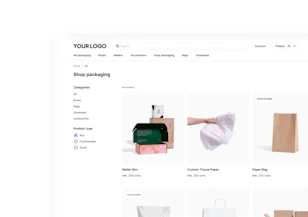
Different product categories demand different solutions. For clothing or non-fragile accessories, lightweight mailing bags are often the most cost-effective choice, helping you save on postage. Beyond the main container, the finishing touches require just as much attention. Securing your parcels with branded packing tapes adds a professional look while deterring tampering. You can then seal tissue paper or mark specific product variations using custom labels.
Finding a partner who stocks all these items under one roof, using FSC and ISEGA certified materials, saves you hours of back-and-forth communication and keeps your parcels visually consistent across your entire range.
Can you design and order your packaging online?
A modern supplier should offer a self-serve digital platform that lets you upload artwork, adjust layouts, and place orders without waiting days for a sales rep to reply. The traditional back-and-forth of sending PDF flat lays and waiting for email approvals slows down your time to market. During Q4, every day counts.
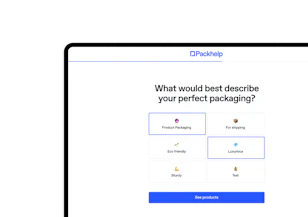
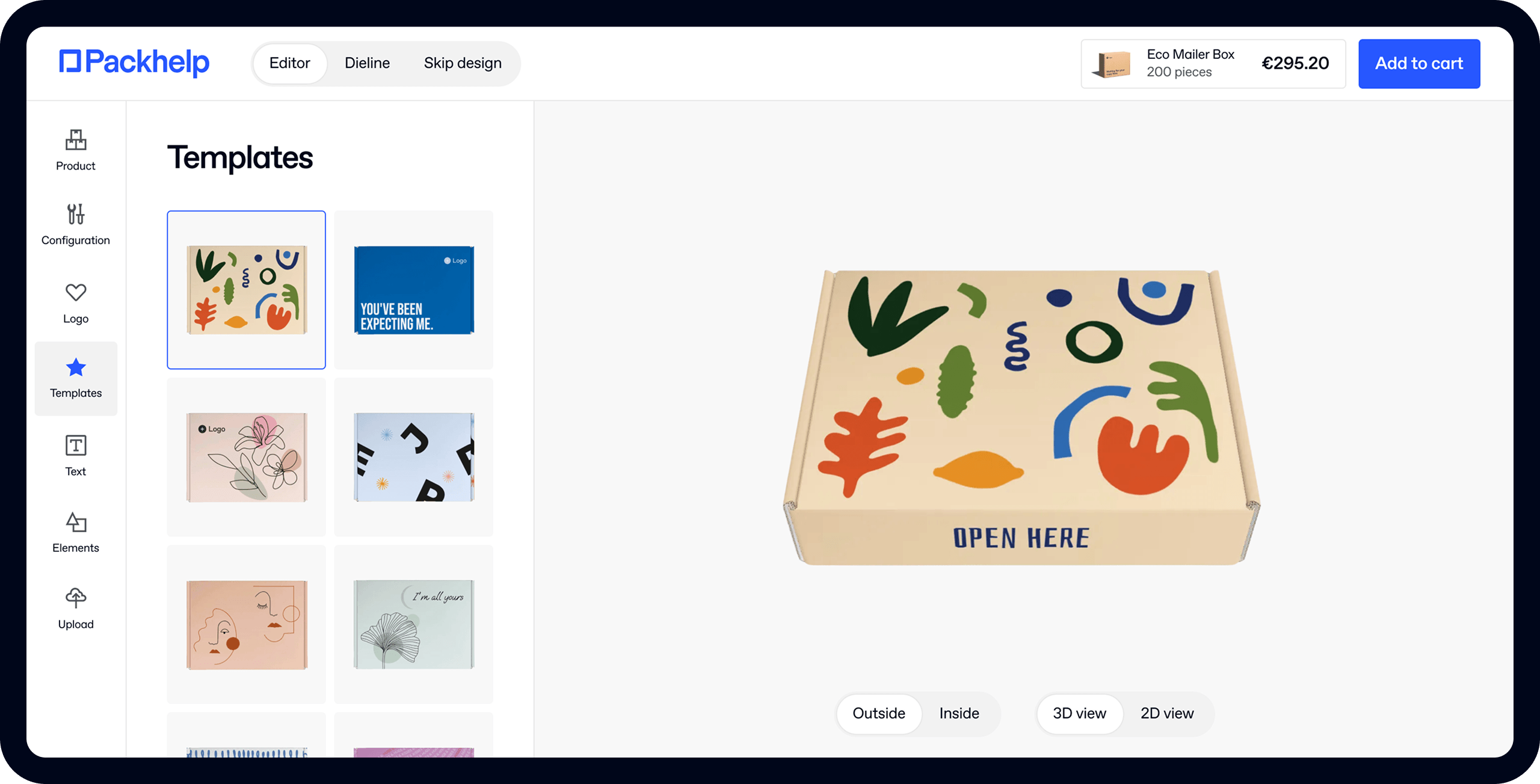
Ideally, you stay in control of the design process. At Packhelp, we provide an intuitive online design editor with a live 3D preview. This tool allows you to apply full CMYK digital printing to our Full Color and product boxes, or single-colour prints to our Eco and Eco White ranges. We also offer UV printing for the Eco Color line.
Seeing exactly how your artwork wraps around the edges and where the fold lines sit before you commit to purchasing gives you real confidence in your design. This autonomy is vital when you are iterating quickly on holiday campaign concepts or need to make a fast text correction without joining a long queue for graphic design support.
What proofing and quality control steps are in place?
You need the ability to verify your design visually and, where needed, physically before committing to a massive production run. Skipping this step often leads to expensive misprints and wasted materials. Even the best digital mockup cannot entirely replace the peace of mind that comes from knowing exactly how your final product will look on the packing bench.
A reliable packaging provider gives you options to review your artwork thoroughly. With our 3D preview technology, you spot alignment issues and text cutoff errors on your screen straight away. That alone removes the vast majority of common design mistakes early.
For larger investments, it pays to work with a supplier who maintains strict quality control at their European production facilities. This helps ensure the structural integrity of the cardboard and the crispness of the print remain consistent from the first box to the ten-thousandth. Knowing that your supplier actively monitors production quality means you can focus on selling your products rather than worrying about collapsing boxes.
Will you get dedicated customer service when things get busy?
You should expect access to a dedicated support team or account manager who understands your specific business needs, especially when placing high-volume orders. When a massive Black Friday order is on the line, generic automated replies are useless. You need a human being who can track your production status and resolve transit issues quickly.
We structure our support to give you clear answers and practical solutions. A dedicated contact can advise you on the best printing methods as your volume grows, helping you transition smoothly from digital to flexographic printing for a massive batch. Having a reliable point of contact means you spend less time chasing updates, which is what separates a true packaging partner from a simple transactional vendor.
Does the supplier support multi-market shipping?
Your packaging partner should be able to distribute your supplies directly to your various warehouses across different countries without unnecessary friction. If your e-commerce brand operates internationally, shipping all your boxes to a central hub in the UK only to redistribute them to your European fulfilment centres wastes time and money.
You need a logistics network that matches your footprint. At Packhelp, we ship packaging directly to 8 European markets. This capability lets you split your orders and send the right volume of materials exactly where your regional teams need them. Keeping your cross-border operations lean means lower overhead costs and faster packing times for your international orders.

Supplier evaluation checklist
Use this quick checklist to compare potential partners and confirm they meet your operational requirements for the upcoming peak season.
- Do their minimum order quantities align with your testing and scaling needs?
- Are their production and delivery timelines clearly stated in days rather than vague estimates?
- Can you source your boxes, bags, tapes, and void fill from their catalogue to consolidate purchasing?
- Do they offer a digital tool with a 3D preview for quick design iteration?
- Is their customer support team responsive and capable of handling complex, high-volume requests?
- Can they ship directly to all the geographical markets where your warehouses are located?
- Do they use FSC and ISEGA certified materials produced in Europe?
Ready to streamline your Q4 preparations? Order everything in one place and secure your supply well before the holiday rush begins.