











































Global Packaging Requirements: Dealing with the Increasingly Stringent Regulatory Landscape

- 200+ templates & patterns
- Real time 3D packaging preview
- Upload logo and choose brand colours


Subscribe now! Receive 15% discount.
Don’t miss out – get 15% off your first order when you join the newsletter. It’s fast, free, and kinda smart.

You're now subscribed!
In this article:
Packaging is a significant part of supply chain management. It protects finished products as they move across the whole supply chain process. It also helps to ensure smooth day-to-day operations.
But the packaging industry faces several issues today. One is that packaging in food and beverage companies contains harmful elements. Several studies have revealed that these items contain toxic chemicals that cause ill health.
Another issue is that packaging has become a primary contributor to global pollution. It is now among the gravest concerns on the planet.
And it will continue to be so until regulators firmly implement the laws and the industry adheres to them.
Due to these, governments in different countries have created and passed laws to manage these serious concerns. Global packaging regulations are now established to ensure sustainability and compliance in all industries. Perfume, food, cosmetics, apparel and many other products have their own packaging regulations.
If you are part of the supply chain, you know how critical it is to conform to these regulations.
On the business side, sustainable packaging is not just for the planet. It is also excellent PR for your company, as long as you avoid greenwashing.
When you add sustainability to your overall goal, you also give eco-conscious customers environment-friendly product choices.
In this article, you will learn about these regulations and their implications for your trade.
Why are Global Packaging Regulations Important?
Global packaging regulation does not allow the use of PFAS in food packaging.
PFAS (per- and polyfluoroalkyl substances) are chemicals used in various products. Studies found that PFAs have harmful effects on human health.
In light of that, global packaging regulations are crucial because they:
- Protect end users.
- Ensure that producers follow established environmental laws.
It becomes more pronounced as the food industry becomes more globalized. Today, a growing number of people are becoming interested in food from other countries.
It means you must create more durable packaging that withstands longer shipping times. It must also be able to seal in freshness for a longer period.

For producers, you have to adapt to packaging regulations. If not, you could be liable for environmental problems such as:
- Greenhouse gas emissions
- Overcrowded landfills
- Litter-pollution
Safety
Safety is also vital in global packaging. International regulations make sure that packaging materials are safe for human use. As a producer, your packaging must:
- Endure material handling, shipping, and storage;
- Protect from tampering or contamination;
- Minimise safety concerns; and,
- Keep the integrity of the product.

Sustainability
Global packaging regulations are fundamental for sustainability, too. When you use the traditional method of packaging, you use up natural resources.
Sustainable packaging, meanwhile, is more beneficial because:
- It consumes fewer natural resources.
- It allows businesses like yours to continue operating for years.
- You will not depend on natural resources for your materials.
Quality
Quality ensures packaging is at high standards. If you are in the packaging industry, you need to ensure that your products are:
- Sturdy and of high quality to ensure product safety.
- Reliable during shipment from the manufacturer to the retailer.
- Durable to protect the product and prevent damage while it sits on a shelf.
Efficiency
Efficiency also matters in global packaging. Here are two reasons why:
- Consumers want functional packaging that fits a purpose and is user-friendly.
- Light and small packaging reduce cost. Value-engineered packaging also minimises the space your product occupies.
Different Plastic Packaging Directives in Different Countries
Countries are working toward eliminating single-use packaging. Most have implemented policies and mandates to deal with the problems it causes.

Below are the plastic packaging directives in select countries and their important points.
Europe: Single-Use Plastics Directive (SUP Directive)
The SUP Directive is a wide-reaching legislation that seeks to reduce pollution caused by single-use plastic products.
Effective May 2019, Europe implemented the directive to phase out single-use plastics. This directive:
- No longer permits the production of single-use plastics.
- Aims to reduce marine pollution and contamination.
- Is a move toward reusable materials for easy recycling.
- Applies to all EU member states and producers operating within them.
- Includes companies at every phase of the supply chain.
Denmark: PFAS Ban on Paper and Cardboard Food Packaging
Effective July 2020, Denmark banned the use of PFAS within food packaging.
The country places a market ban on food contact materials derived from paper or cardboard if PFAS has been used in its manufacture.
This directive:
- Allows PFAS packaging only if it has a functional barrier that prevents fluorinated substances from migrating to the food.
- Is not limited to dairy commodities.
- This applies to food and beverage manufacturers that use PFAS for packaging. It also covers paper and cardboard packaging types.
United Kingdom: UK Plastic Packaging Tax (PPT)
Effective April 2022, UK PPT aims to promote the use of recycled plastic and to improve the levels of recycling and plastic waste collection.
The PPT directive:
- Prohibits plastic packaging with less than 30% recycled plastic.
- Taxes plastic packaging with less than 30% recycled plastic at £200 per tonne.
- Has a 10-tonne registration threshold and requires businesses to register if they manufacture or import 10 or more tonnes of plastic packaging.
- Applies to packaging producers and importers.
- Covers imported goods and biodegradable and compostable plastics.
- Affects around 20,000 businesses across various industries.
Germany: German Packaging Act
Germany enacted the packaging act to increase recycling rates for waste packaging materials.
It applies to all manufacturers and international retailers that sell packaged goods to end-users in the country.
The Packaging Act includes these provisions:
- Any company that ships goods placed in sales packaging to German consumers must pay a license fee for creating packaging waste. The license fee is based on the volume and materials used in the packaging placed on the market.
- All companies that place sales packaging on the market must comply with registration, system participation, and data reporting.
- Companies that do not comply with the conditions will be issued written warnings, pay penalties of up to €200,000, or face sales bans.
German Ordinance on Single-Use Plastics
Entered into force in 2021, the ordinance implemented the requirements of the EU Directive 2019/904, which is to reduce the environmental impact of certain plastic products. The ordinance aims to:
- Ban certain single-use plastic products for which there are environmentally-friendly alternatives.
- Require Member States to place on the market single-use plastic products with lids made of plastic only if the lids remain attached to the containers while they are in use.
- Ensure that containers allowed to be placed on the market bear a marking on the packaging or the product itself.
France: French Environmental Code / Circular Economy Law
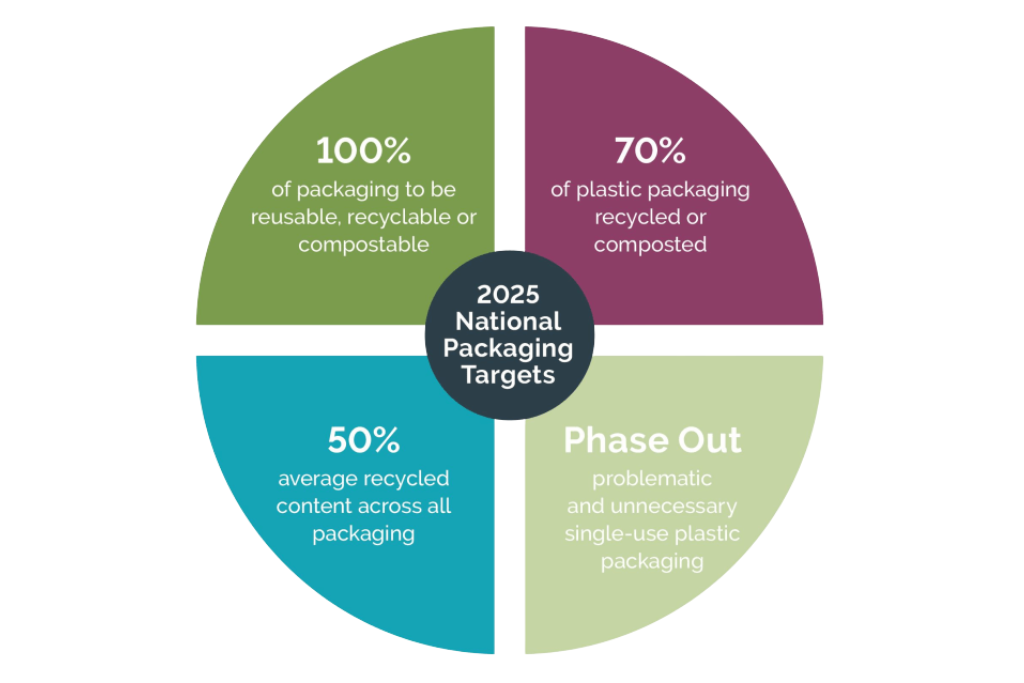
The law introduced new obligations on plastic waste that affect production and consumption.
The Circular Economy Law strengthened the following existing measures:
- Progressive ban on additional single-use plastic products.
- Ban on the import and manufacture of single-use plastic bags intended for sale
- Limits on the use of plastic
France aims to ban single-use plastic packaging from the French market by 2040.
To accomplish this, the country established targets for the reduction, reuse, and recycling of SUPs. The Circular Economy Law likewise imposed that by 2025, 100% of plastics must be recycled.
Packaging Law in France
In accordance with the EU Packaging Waste Directive, France imposes that any business that sells packaged goods to the country must register their packaging with a recycling scheme. Manufacturers, importers, and retailers are all required to make financial contributions toward a recycling organisation.
Registration is mandatory from the first package sent to the country.
There is a flat fee of 80€ for any business that sells no more than 10,000 products to France per year. French environmental agency ADEME issues a unique identification number to all businesses that comply with the recycling regulations.
The Netherlands: Environmental Management Act

Effective July 2021, the country prohibited the use of single-use plastic products in the market if there was an affordable, sustainable, and less harmful alternative.
The Environmental Management Act states that:
- Manufacturers and importers that use plastic packaging such as food containers, bags, and wrappers must compensate for the costs of cleaning up, transporting, and processing of the litter.
- The producers must cover the cost of measures that raise awareness of the environmental impact of single-use plastic packaging.
- The packaging of single-use plastics must have markings stating that the product contains plastic that, if thrown away, will have a negative environmental impact.
- Producers of packaging materials who market or import more than 50,000 kg per year must pay a waste management contribution to the government’s Packaging Waste Fund.
- Producers and importers of plastic packaging must ensure that 75% of all the packaging they market or import is reused and at least 70% is recycled.
Italy: Single-use Plastics Directive
The Italian Legislative Decree 196/2021
Legislative Decree 196/2021 implements the Single-Use Plastics Directive that prohibits placing plastic packaging on the market.
The objective of the decree, which took effect in January 2022, is to reduce the environmental impact of single-use plastics. The regulation aims to:
- Promote the use of recycled plastic suitable for food contact in plastic bottles for beverages.
- Impose restrictions on companies and implement penalties for those that continue using single-use plastics.
- Introduce incentives for companies that purchase and use substitute products. The tax credit is 20% (up to € 10 thousand for each operator, for a total amount of € 3 million / year, from 2022 to 2024).
- Require legible and indelible markings to be placed on certain single-use plastic products. The markings must inform consumers about the presence of plastic in the products and the negative impact on the environment if they are improperly disposed of.
Italy’s Plastic Tax
To enter into force in January 2023, Italy’s Plastic Tax was created to reduce the production and consumption of single-use plastic products. The plastic tax is due at 0.45 €/kg of virgin plastic included in the MACSI.
The plastic tax aims to:
- Minimise the production and use of single-use plastics (MACSI).
- Promote the principles of the circular economy.
- Apply the tax to a broad array of plastic products such as plastic bottles and packaging.
- Manufacturers who produce MACSI in Italy and intend to sell them.
- Tax purchasers or sellers who ship MACSI from other EU member states, depending on whether the reason for the purchase is for economic activity purposes.
Spain Plastic Packaging and Packaging Waste
Spain has several regulations concerning plastic packaging and waste.
Act 11/1997 (Packaging and Packaging Waste)
- It aims to prevent and reduce the impact of packaging and packaging waste management on the environment.
- It includes measures to prevent the production of packaging waste and to reduce disposal by reusing packaging and recycling packaging waste.
Royal Decree 293/2018 (Reduction in the use of plastic bags)
- The purpose of the Royal Decree is to minimise the consumption of plastic carrier bags.
- It aims to prevent and reduce the negative effects of plastic waste on the environment, especially on aquatic ecosystems.
- It also intends to avoid the loss of material and economic resources caused by the abandonment of plastic bags and their dispersal in the environment.
Law 7/2022 (Plastic Tax)
Spain introduced the Plastic Tax law on non-reusable plastic packaging, which will be in effect in January 2023. As part of Law 7/2022, the plastic tax is applied to the following products:
- Non-reusable plastic containers
- Semi-finished plastic products intended for the production of non-reusable plastic packaging
- Plastic products intended to allow the closure, trading, or presentation of the non-reusable containers
The Plastic Tax law applies to the following transactions that involve the use of non-reusable plastic packaging:
- The production or manufacture of the plastics in scope.
- The intra-community acquisitions of the abovementioned plastics.
- The imports of the said type of packaging.
- The unusual introduction of the said packaging in Spain.
The rate is EUR 0.45 / KG and the taxable base is based on the weight (in kgs) of the specified non-reusable plastic. A third party will determine and calculate the amount of taxation for non-reusable plastic. The plastic tax is applied to sole traders as well as producers or importers of goods in plastic packaging.
Poland Act on Packaging Management and Packaging Waste
The purpose of this Act is to decrease the quantity and the dangers that packaging and packaging waste pose to the environment. The Act covers:
- Requirements for packaging that will be put on the market
- Principles of recycling of packaging recovery
- Management of packaging and packaging waste
- Guidelines for determining and collecting product fees
What Can Happen if You Fail to Comply with the Global Packaging Regulations?
Global packaging regulations are created for a reason. If you fail to comply, you could face consequences that could be dire for your business.
Depending on your location, you may face a criminal offence. It can lead to prosecution, heavy penalties, or imposition of tax increases. In some countries, the alternative to prosecution is civil sanctions.
Can Make Your Goods Unsellable
Regulations govern everything, from product labelling to the language used on your packaging. If your products are not compliant in any way, you cannot sell them to your target market.
Since they are unsellable, they will languish in your warehouse. They will likely stay there until they go out of date while you find ways to solve the problem.
Pay Fine for Violations
Violators will feel the effect of the penalties if they neglect to follow the rules. If they also fail to register with agencies, then they could incur even more financial sanctions.
Many regulations call for producers to comply at local levels and enforce initiatives. Lawmakers expect them to cover costs for the necessary treatments. Their failure to comply will result in added penalties.
In the UK, it is a crime if you fail to comply. As proof, many businesses have been found to have neglected packaging regulations. They were subjected to pay fines of over £250,000 as a result.
Loss of Sales
If your packaging is non-compliant, will it impact your sales and profits? Of course, it will. Non-compliant products are unsafe and can cause harm. Not only that. It can lead to other problems as well:
- Retailers may reject your product. Your product may be subject to a recall.
- Your product may not even leave your warehouse or factory.
- If it did leave, the authorities at customs would have rejected it.
This is why you have to follow regulations to help ensure that everything is in good order. It will assure you that you are moving in the right direction.
Conclusion
Packaging is necessary to protect products. But, the industry needs to find better ways to lessen waste. The goal is to achieve sustainable packaging with recyclable materials.
Governments around the world support this by creating rules to manage packaging waste.
Being in the packaging business, you need to be aware and compliant. The key is to find a balance between ethics and cost-effective manufacturing.